Quick answer
Yes, you can swim in Lake Minnewanka, though the glacial-fed water remains between 4°C and 15°C even in summer. Parks Canada permits swimming but requires a valid park pass and recommends experience with cold-water immersion. No lifeguards are on duty, so swimmers assume full responsibility for their safety in conditions that can cause cold shock within minutes.
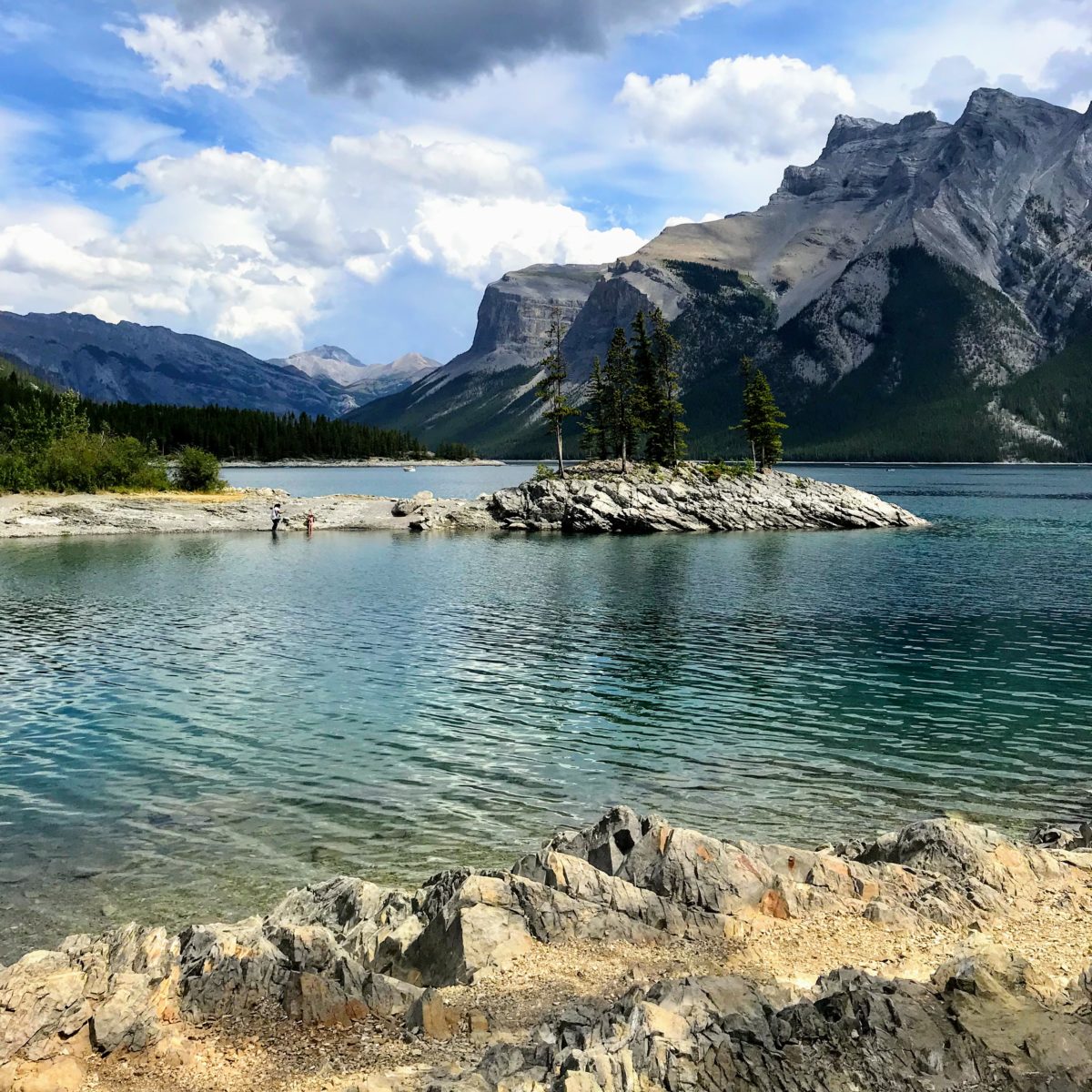
Lake Minnewanka holds 1.8 billion cubic metres of glacial water, making it the longest lake in the Canadian Rockies and one of the coldest swimming environments accessible by paved road. The reservoir was created in 1941 when a hydroelectric dam raised the original lake's water level by 30 metres, submerging the resort village of Minnewanka Landing—ruins that technical divers still visit at depths recreational swimmers will never reach. Swimming in Minnewanka requires preparation most flatland lakes never demand. The water temperature peaks at 15°C during late July and early August, then drops sharply as autumn approaches. Even strong swimmers experience shortened breath and reduced motor control within the first two minutes of immersion. The shoreline offers no designated swimming beach with gradual entry—most access points drop quickly into deep water over submerged rocks and timber from the flooded forest. The lake's size creates another variable: wind. Afternoon thermal winds sweep down from the surrounding peaks, generating whitecaps and waves that turn calm morning water into a challenge by noon. Swimmers who venture beyond the immediate shore face currents and temperature gradients that shift without warning. Parks Canada prohibits swimming near the boat launch and marina due to vessel traffic, concentrating safe access along the northeast shoreline where the Minnewanka Loop road runs closest to the water. Anyone considering a swim at Minnewanka should understand that rescue response times are measured in tens of minutes, not seconds. Cell service is intermittent. The nearest medical facility is 20 kilometres away in Banff townsite. Cold-water immersion suits or wetsuits extend safe swim duration significantly, but most visitors arrive in standard swimwear, unaware that hypothermia onset begins faster here than in any ocean at the same latitude. The conservation fee grants access to the shoreline, but the lake itself operates under wilderness rules where self-reliance is not optional—it is the only safety system in place.
“The water temperature peaks at 15°C during late July and early August, then drops sharply as autumn approaches.”
Can You Swim In Lake Minnewanka Safely?
Lake Minnewanka is not patrolled by lifeguards and its near-freezing water temperatures create serious hypothermia risk within minutes. Understanding cold-water hazards and respecting the lake's glacial conditions can prevent life-threatening emergencies.
Do
- Stay on designated shorelines and beaches
- Wear a proper life jacket if entering water
- Supervise children closely near the water's edge
- Know hypothermia symptoms: shivering, confusion, loss of coordination
- Have warm, dry clothing immediately accessible
Don't
- Don't swim in the main lake body
- Don't underestimate how quickly cold water incapacitates you
- Don't enter water alone or without telling someone
- Don't assume summer air temperature reflects water temperature
- Don't ignore early signs of cold shock or fatigue
When Is It Safely Possible To Swim In Lake Minnewanka?
There is no recommended time for swimming in Lake Minnewanka, as the glacial water remains dangerously cold throughout the year. Visitors interested in the lake environment should prioritize early morning arrivals to avoid peak congestion.
Summer (July–August)
High visitor volume10°C to 15°C; cold water.
The lake remains frigid despite peak air temperatures. Casual swimming is not advised due to thermal shock risk.
Shoulder Season (May–June, Sept–Oct)
Moderate visitor volume0°C to 10°C; freezing water.
Water temperatures often hover near freezing. Hypothermia is a significant risk during these months.
Weekday mornings
Low traffic levels—
Arriving between 07:00 and 09:30 provides the best opportunity to experience the shoreline without crowds. Water remains unsafe for swimming at all hours.
Verdict: The best time to visit Lake Minnewanka to avoid crowds is between 07:00 and 09:30 on weekdays, though swimming should be avoided entirely due to the extreme water temperature.
How To Get To Lake Minnewanka For Your Visit
Lake Minnewanka is located along the Minnewanka Loop in Improvement District No. 9, AB, Canada. The most direct way to reach the site is by vehicle from the town of Banff.
Trans-Canada Hwy/AB-1 E to Lake Minnewanka Rd
Roam Transit Route 6 from Banff High School
Check availability
Common Questions About Swimming at Lake Minnewanka
Everything you need to know about can you swim in lake minnewanka